Torquay's housing stock is dominated by Victorian and Edwardian terraces plus early 20th-century semis built on sloping ground near the sea. Many of these properties received spray foam in lofts during the 1980s and 1990s to meet then-current energy standards. Over time the closed-cell material traps condensation driven by salt-laden air, especially where original slate roofs meet stone or brick parapets. Homeowners notice musty smells in upstairs rooms after heavy winter rain because the foam blocks the eaves and ridge ventilation that these buildings rely on.
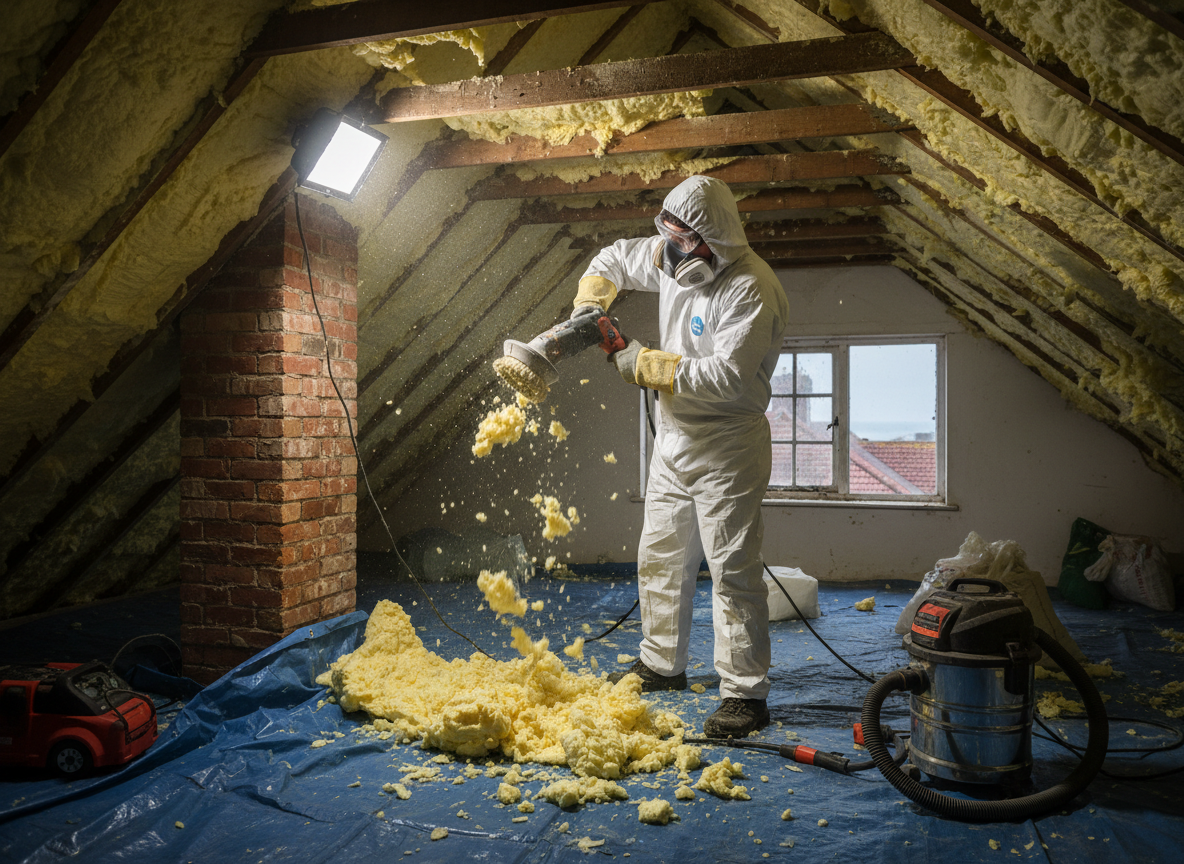
Removal begins with a full loft survey to identify timber condition and any hidden electrical or plumbing runs. The foam is cut into sections with oscillating tools rather than ripped out wholesale, which reduces dust and prevents damage to lath-and-plaster ceilings below. In properties around The Terrace and Ellacombe, narrow access hatches and low collar ties make mechanical extraction slower and require more containment sheeting than in newer estates further inland. All waste is bagged on site and taken to licensed disposal facilities; leaving residue can allow spores to spread through the ventilation paths that are reopened once the foam is gone.
After extraction, the roof void is left open for at least 48 hours so the original timbers can dry before any new insulation is considered. Coastal humidity means moisture meters are used on rafters and joists before the job is signed off. In some cases, additional ridge vents or eaves grilles are fitted because the original airflow paths were never designed for modern airtightness levels. This step prevents the rapid reappearance of damp that occurs when foam is simply covered over rather than fully removed.
Technician insight
In Torquay, the thing that catches most people out with spray foam insulation removal is how quickly the salt air reintroduces moisture once the foam is stripped from the rafters in terraces around The Terrace and Ellacombe. Homeowners often expect the void to dry on its own, but the narrow eaves and missing ridge vents that were never upgraded mean you have to force airflow for days or the joists start showing fresh rot within weeks.
Loft Clearance in a Torquay Terrace
A homeowner in a three-storey terrace near the harbour reported persistent damp patches on bedroom ceilings after recent storms. Inspection showed spray foam completely blocking the original eaves vents and trapping condensation against the rafters. We cut the foam into sections, extracted it through the small access hatch, and left the void open for three days of forced ventilation. Moisture readings dropped to acceptable levels and the musty smell disappeared without further work.
How it works
- 1
Initial Survey And Access Check
We inspect the loft, note roof construction, and identify any restricted access points typical of Torquay terraces.
- 2
Containment And Dust Control
Floors and ceilings are protected with heavy-duty sheeting before cutting begins to keep debris out of living spaces.
- 3
Sectional Foam Removal
Foam is cut into manageable pieces and extracted using handheld tools suited to the confined roof voids found locally.
- 4
Timber Drying And Final Clean
The void is ventilated for several days, moisture levels checked, and all waste removed before handover.
Pricing
Prices vary according to loft size, access difficulty, and the depth of foam in older Torquay properties.