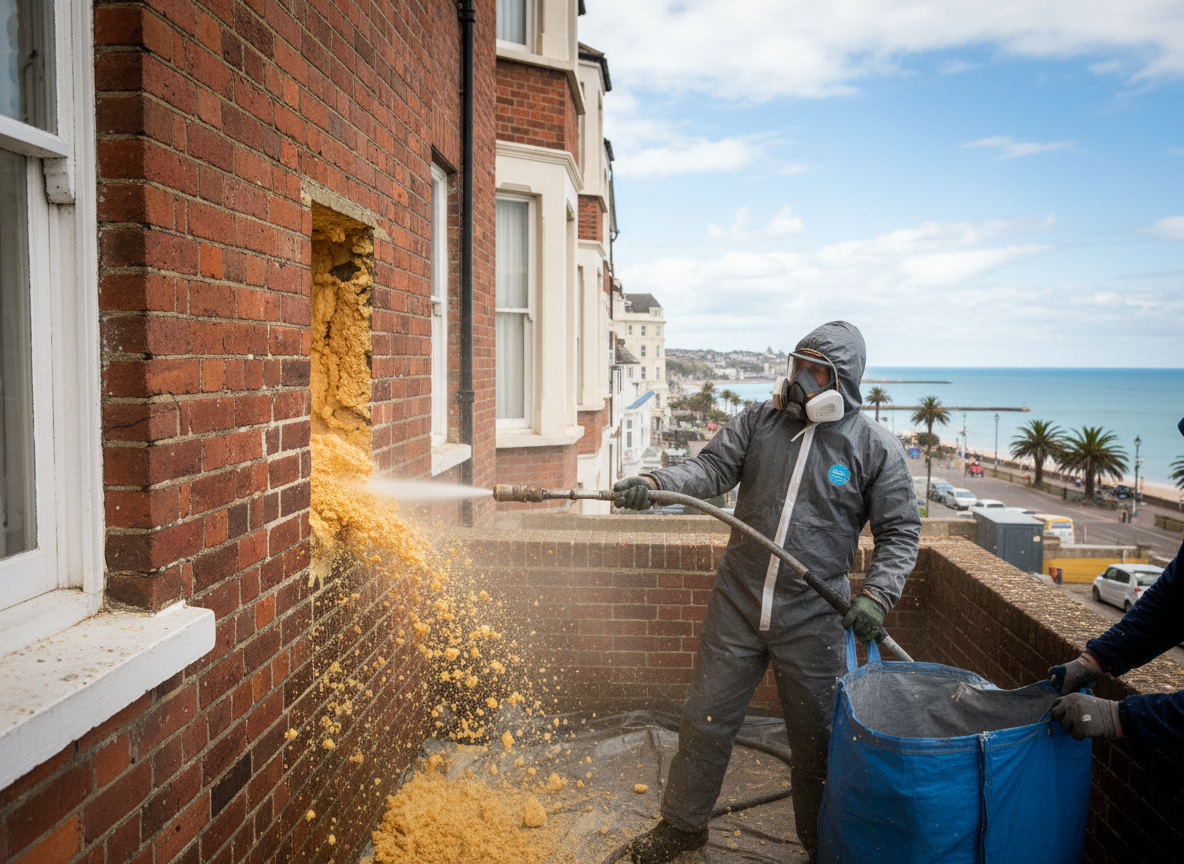
Torquay's older housing stock, particularly Edwardian and Victorian terraces around the harbour and in areas like St Marychurch and Chelston, often received cavity fill foam during the 1980s and 1990s. Coastal humidity and frequent winter rain mean this closed-cell material frequently traps moisture against brickwork, leading to internal damp, timber decay, and reduced breathability in solid walls that were never designed for impermeable insulation. Removal requires careful drilling patterns to avoid damaging the original masonry while extracting residue that can migrate into voids near window reveals and floor joists.
Extraction work in the Torquay area must account for the region's mild but persistently wet climate, where salt-laden air accelerates corrosion on metal wall ties once foam is disturbed. Technicians typically work from the exterior on properties with rendered finishes common along The Terrace and surrounding streets, using negative pressure systems to contain dust and prevent contamination of nearby gardens or neighbouring homes on tight plots. Incomplete removal leaves pockets that reabsorb moisture during heavy downpours, so full cavity clearance followed by inspection of weep holes is essential before any new insulation is considered.
Homeowners in Devon coastal locations sometimes discover foam has migrated into roof voids or around chimney breasts during removal, especially in converted guest houses that were upgraded decades ago. The process involves staged access points, debris capture, and post-extraction drying periods that can extend several days in cooler months when evaporation slows. Properties near the seafront experience faster re-wetting if extraction is rushed, so thorough cavity mapping and verification of clear airways before handover prevents repeat issues common in the local building stock.
Technician insight
In Torquay, the thing that catches most people out with Cavity wall spray foam removal is how quickly salt air and driving rain re-wet cavities in pre-1920 terraces once the foam is disturbed, especially on north-facing walls near the harbour where drying times stretch longer than inland Devon properties.
Foam Extraction in a Harbour-Front Terrace
Persistent internal damp appeared on the ground floor of an Edwardian terrace off Torquay harbour. Inspection showed aged cavity foam blocking ventilation and holding moisture against the inner leaf. Extraction cleared the full height of the walls, followed by weep hole restoration and a monitored drying period. The property regained proper cavity airflow without further moisture issues.
How it works
- 1
Initial Cavity Assessment
Survey of wall construction, foam condition, and moisture mapping from the property exterior and accessible interior points.
- 2
Access and Containment Setup
Drilling of extraction ports at calculated intervals while installing dust and debris containment suited to dense Torquay terraces.
- 3
Foam Extraction
Mechanical removal of cavity fill material with negative pressure collection to clear voids completely without damaging original brick or ties.
- 4
Post-Removal Verification
Inspection of cleared cavities, weep hole clearance, and drying period before any further insulation or repair decisions.
Pricing
Cost depends on property age, cavity depth, and access constraints; inspection provides a clear quote before work begins.